Understanding Mirrors: Types, Materials, and Practical Uses
From the still surface of a pristine lake reflecting the sky to the polished glass illuminating our daily routines, the concept of a mirror has captivated humanity since time immemorial. More than just a simple object, a mirror is a sophisticated instrument that plays a fundamental role in how we perceive ourselves and the world around us. Often referred to as a "looking glass," a mirror is essentially a surface that reflects an image, bending light in such a way that it creates a visual representation of whatever lies before it.
The magic of a mirror lies in its ability to reverse the direction of light at an angle equal to its incidence. This property, known as specular reflection, allows us to see not only ourselves but also objects behind us, or even those positioned at an angle outside our direct line of sight, such as around a corner. While natural reflectors like water have always existed, humans began manufacturing specialized mirrors thousands of years ago, evolving from rudimentary polished stones and metals to the advanced glass and metal constructions we use today.
The Science Behind the Reflection: How a Mirror Works
At its core, a mirror is a wave reflector. Light, which consists of electromagnetic waves, interacts with the incredibly smooth surface of a mirror in a unique way. When light waves strike a flat mirror, they retain their original curvature and vergence (the degree to which light rays converge or diverge) but reflect in an equal yet opposite direction. This precise reflection allows the waves to form a coherent image when focused through the lens of our eyes or a camera, creating the illusion that the light originated from behind the mirror itself. For a deeper dive into the physics of light, explore our article: How Do Mirrors Work? The Science of Light Reflection Explained.
Alternatively, light can be conceptualized as rays—imaginary lines perpendicular to the wavefronts. These light rays strike the mirror and are reflected at an angle precisely equal and opposite to their incident angle. This precise, ordered reflection is what distinguishes a mirror from objects that simply diffuse light, like a matte-painted wall, which scatter light waves in countless directions. For a surface to act as a true mirror, its texture or roughness must be significantly smaller than the wavelength of the light waves it is reflecting. This extreme smoothness is crucial for maintaining the integrity of the reflected image, ensuring it remains sharp, clear, and true to the original.
When you look into a mirror, you perceive a "mirror image" or reflected image formed by the light emitted or scattered by objects in the environment, which is then reflected by the mirror towards your eyes. This creates the perception that these objects are positioned either behind the mirror or, in some cases, in front of it. The flatness of the mirror surface plays a critical role in the image produced: a plane mirror yields a real-looking, undistorted image, while curved mirrors can introduce fascinating distortions, magnifications, or reductions, all while preserving the fundamental properties of the image like lines, contrast, sharpness, and color.
A Journey Through Time: The Evolution of Mirror Materials
The history of the mirror is a testament to human ingenuity and our enduring fascination with self-reflection. Natural mirrors, such as the calm surface of water, have been observed since prehistoric times, but the purposeful creation of reflective surfaces by humans dates back thousands of years. The earliest manufactured mirrors, around 6000 BCE, were crafted from polished obsidian—a naturally occurring volcanic glass—in regions like Anatolia (modern-day Turkey). Similar obsidian mirrors later emerged in Central America around 600 BCE, demonstrating a global human inclination towards reflective objects.
The Bronze Age, spanning from approximately 4000 to 3000 BCE, saw the advent of metal mirrors, typically made from highly polished bronze, copper, or silver. These early metal mirrors, though far from perfect, offered a more consistent reflection than obsidian. It wasn't until Roman times, around the 1st century AD, that rudimentary glass mirrors first appeared. However, these early glass mirrors were often of poor quality and lacked widespread adoption. The true breakthrough for glass mirrors came during the Renaissance, particularly in 16th-century Venice, where Murano artisans developed advanced techniques using tin-mercury amalgams as backing for glass, producing mirrors of unprecedented clarity and brilliance.
The modern silver-backed mirror, offering superior reflectivity across the visible spectrum, was a significant innovation. It was invented in 1835 by German chemist Justus von Liebig, who devised a chemical reduction process using silver nitrate to deposit a thin, uniform layer of silver onto a glass surface. Today, common household mirrors typically consist of a clear glass substrate, which provides a naturally smooth and very hard surface, coated with a thin layer of highly reflective silver or aluminum. This delicate metallic layer is then protected by additional layers, often including copper and paint, to prevent oxidation and damage, ensuring the mirror's longevity and performance. For more on this fascinating historical journey, read our article: From Ancient Obsidian to Modern Glass: The Evolution of Mirrors.
Types of Mirrors and Their Unique Reflections
While the most common mirror encountered daily is the plane mirror (flat surface), the world of mirrors extends far beyond this simple form, each type offering distinct reflective properties:
- Plane Mirrors: These are the standard flat mirrors found in homes, bathrooms, and dressing rooms. They produce a virtual image that is upright, the same size as the object, and appears to be located behind the mirror at an equal distance. The image is laterally inverted (left and right are swapped), a characteristic we've all become accustomed to.
- Concave Mirrors (Converging Mirrors): These mirrors have a reflective surface that curves inward, like the inside of a spoon. They converge parallel light rays to a focal point. Concave mirrors can produce both real and virtual images, depending on the object's distance from the mirror. They are often used as shaving mirrors or makeup mirrors because they can produce magnified, upright images when an object is placed close to them. In scientific and industrial applications, they are found in telescopes, solar furnaces, and car headlights, where they help to focus light.
- Convex Mirrors (Diverging Mirrors): With a reflective surface that curves outward, like the back of a spoon, convex mirrors diverge parallel light rays. They always produce a virtual, upright, and diminished (smaller) image. Their primary advantage is that they provide a wider field of view than plane mirrors. This makes them ideal for security mirrors in shops, rear-view mirrors in vehicles (often with a "objects are closer than they appear" warning), and traffic mirrors at blind spots, where a broad perspective is crucial for safety.
Practical Uses of Mirrors: Beyond Personal Grooming
The utility of mirrors extends far beyond merely checking one's appearance, though personal grooming remains a primary and ancient use. Mirrors are indispensable tools across numerous fields, blending aesthetic appeal with profound practical functions:
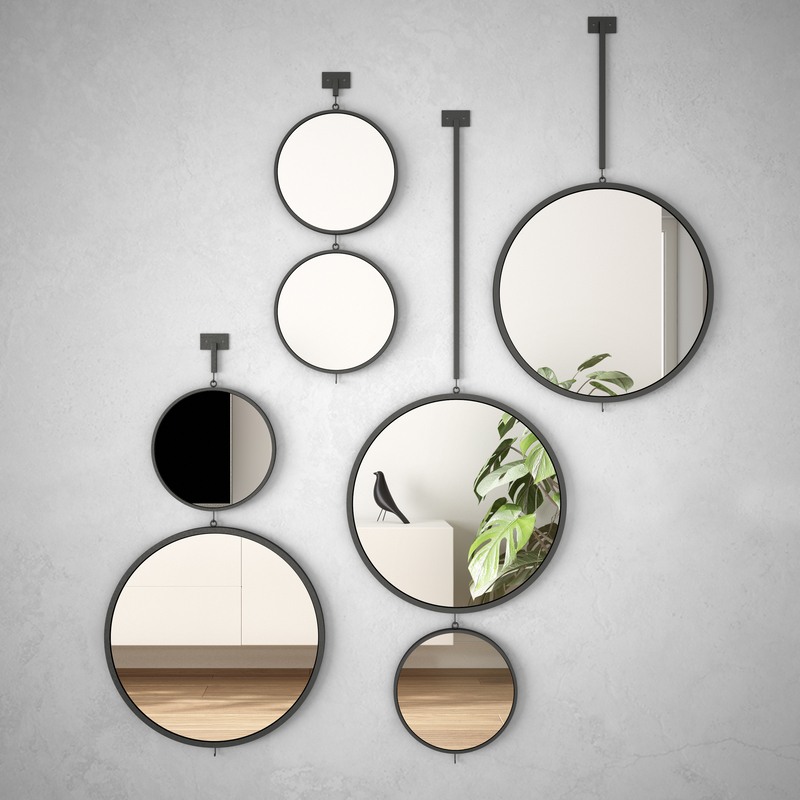
- Decoration and Architecture: Mirrors are widely used in interior design to create an illusion of space, amplify light, and add decorative elements. Large mirrors can make small rooms feel more expansive, while strategically placed mirrors can bounce natural light deeper into a building, brightening darker areas. They can also serve as captivating art pieces or focal points.
- Automotive and Transportation: Vehicles rely heavily on mirrors for safety. Rear-view and side-view mirrors provide drivers with critical information about their surroundings, minimizing blind spots and aiding in safe navigation. Convex mirrors are often used in these applications due to their wider field of view.
- Scientific Instruments: Mirrors are fundamental components in a vast array of scientific instruments. Telescopes use large concave mirrors to gather and focus light from distant celestial objects, allowing us to explore the cosmos. Microscopes, lasers, cameras, and even advanced medical equipment like endoscopes incorporate precision mirrors to direct and manipulate light for imaging and analysis.
- Safety and Security: Beyond automotive uses, convex mirrors are deployed in shops, warehouses, and at street corners to eliminate blind spots, preventing accidents and deterring theft. Inspection mirrors are used by security personnel to check under vehicles or around corners.
- Optical Illusions and Art: Artists and entertainers frequently use mirrors to create mesmerizing illusions, infinite reflections, and thought-provoking installations that challenge perception.
- Solar Energy: Concave mirrors are a key component in concentrated solar power (CSP) systems, where they focus sunlight onto a receiver to generate heat, which is then converted into electricity.
Choosing and Caring for Your Mirror: Practical Tips
When selecting a mirror, consider its intended purpose. For general viewing, a high-quality plane mirror with a clear, distortion-free reflection is essential. For makeup or shaving, a magnifying concave mirror can be highly beneficial. For safety or security, a convex mirror offers a wider field of view. Always check the clarity of the reflection and the quality of the glass and backing.
To ensure your mirrors last and provide optimal reflection, proper care is crucial. Avoid abrasive cleaners that can scratch the glass or damage the protective backing. A soft, lint-free cloth with a gentle glass cleaner or a mixture of water and white vinegar is usually sufficient. Regular cleaning prevents dust and grime from dulling the reflective surface. For mirrors in high-humidity areas like bathrooms, ensure good ventilation to prevent moisture from compromising the backing over time.
Conclusion
From their ancient origins as polished obsidian to the sophisticated silver-backed glass we know today, mirrors have consistently served humanity as essential tools for self-reflection, observation, and innovation. They stand as a testament to our ongoing quest to understand light and its profound impact on our visual world. Whether enhancing the aesthetics of our homes, ensuring safety on our roads, or unlocking the mysteries of the universe through scientific instruments, the humble mirror remains an indispensable and truly captivating object, forever reflecting the ingenuity and curiosity of humankind.